This timeline aims to provide a visual reference to key dates in the Transatlantic Slave Trade. Events related to specific sunken ships discussed on this website are color coded.
All events related to the Henrietta Marie will appear in light blue, Guerrero in light green, Peter Mowell in orange, and Clotilda in yellow. Significant dates related to the Transatlantic Slave Trade appear in white.
1525
First slave voyage direct from Africa to the Americas.
1699
British slave ship Henrietta Marie, part of the Triangle Trade, made its way from England to Africa in December 1699.
1700
Henrietta Marie Sinks
Enroute back to London after delivering enslaved Africans to Jamaica, the ship was hit by a hurricane. There were no slaves aboard when the ship sank.
1807
The Transatlantic Slave Trade is outlawed in Britain.
1808
In January, U.S. Federal law abolished the Transatlantic Slave Trade.
1820
The Transatlantic Slave Trade is outlawed in Spain.
1827
Guererro Sinks
On December 19, Spanish pirate ship Guerrero sank off the coast of the Florida Keys, carrying 561 stolen Africans, 41 of whom drowned with the ship.
1829
After nearly three years of political uncertainty, 121 surviving Africans from the Guerrero shipwreck were taken from St. Augustine as free men to live in Liberia, the American-controlled colony in Africa on September 30. Poor navigation, stormy weather, and an ill-equipped ship landed them in Barbados after 89 days.
1830
From Barbados, the journey was long, and more lives were lost along the way before the remaining 91 men who were rescued from the Guerrero and transported from Key West to St.
Augustine landed back in Africa.1860
In February of 1860, the Peter Mowell made its way to Liberia from New Orleans. It met with a larger ship operating as a slave market at sea, carrying about 1,000 captive Africans near the Congo River. Over 400 people were transferred to the Peter Mowell.
Because the slave trade had been outlawed in the United States in 1807, the Peter Mowell was operating as slave ship illegally.
1860
Timothy Meaher, local businessman in Mobile, AL, made a bet that he could smuggle Africans into the country for cheaper than buying slaves in the domestic market without getting caught.
Meaher hired Captain William Foster, who built the Clotilda and then set sail for Africa in April.
1860
Clotilda arrives illegally in Mobile, Alabama on July 9.
Last known slave ship to illegally bring stolen Africans to the U.S.
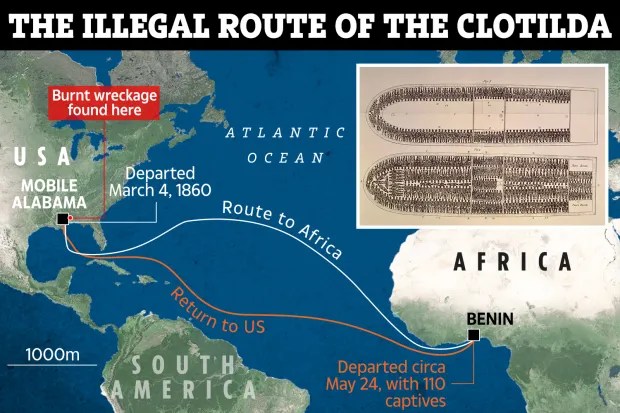
JASON TREAT AND KELSEY NOWAKOWSKI, NG STAFF. ART: THOM TENERY
July 1860
Clotilda Sinks
To hide evidence of their crime, Meaher and Foster burned and sunk the Clotilda.
1860
Peter Mowell Sinks
Fear of getting caught led the crew to change course, causing the Peter Mowell to wreck near Lynyard Cay, Bahamas.
Because the ship were close to shore, those
aboard were able to climb to land and were then rescued by wreckers.1972
Henrietta Marie discovered by Captain Demostenes “Moe” Molinar
Many shackles were first discovered in 1972, including children’s sized shackles and an 800-pound iron cannon.
Abandoned after its initial finding, the ship remained largely unexplored for 11 years.
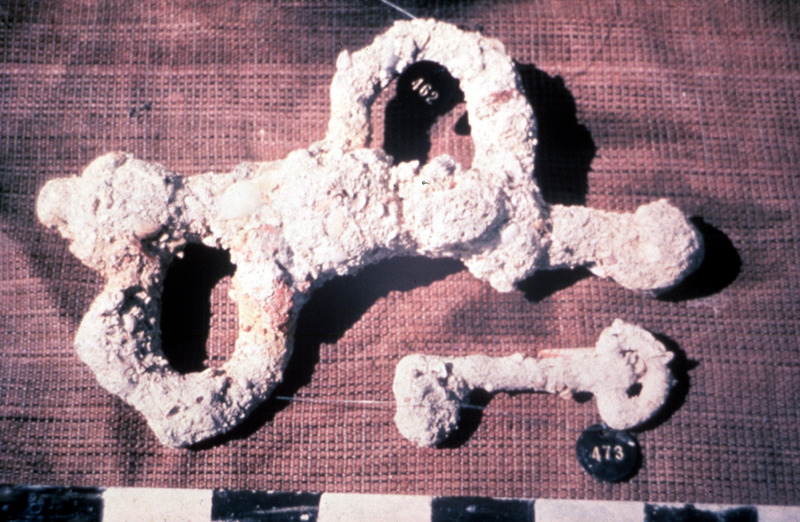
David Moore, Site Report: Historical and Archaeological Investigation of the Shipwreck Henrietta Marie
1983
Henrietta Marie identified
Henrietta Marie‘s bell was found, making it possible to confirm the ship’s identity, and the year she was built, in 1699.
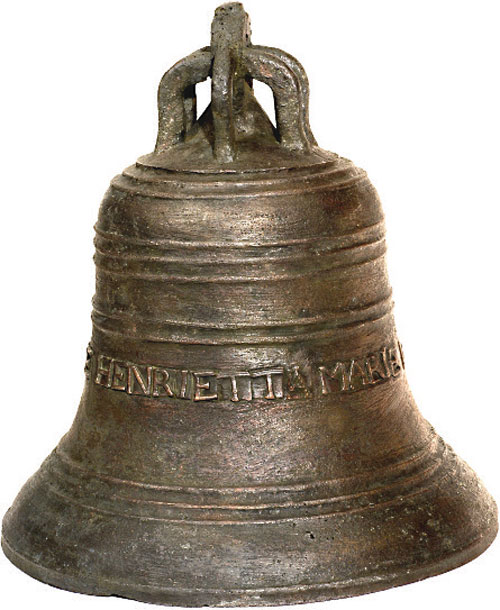
Early 1990s
Gail Swanson, a local Floridian turned Guerrero historian, ignited the search to locate the Guerrero with her research and writing, which quickly became her passion project.
1993
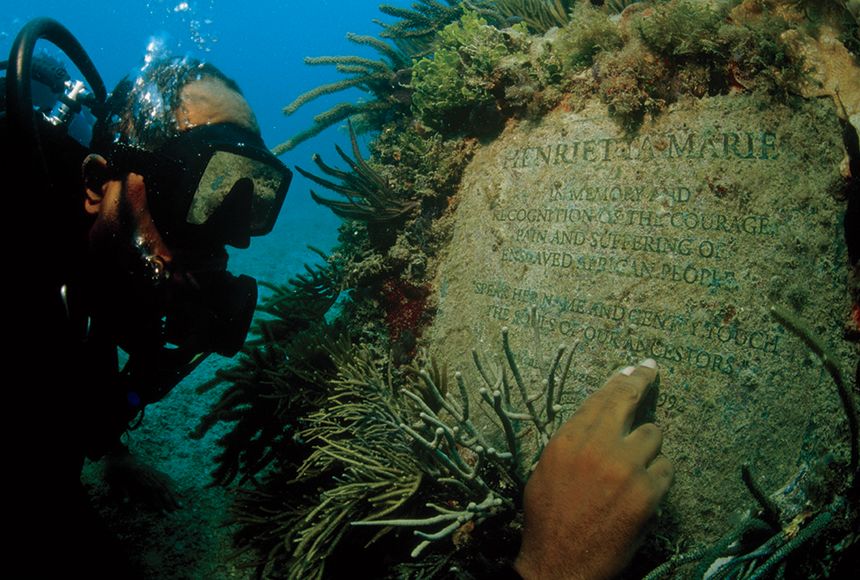
A bronze memorial plaque facing toward Africa was placed at the Henrietta Marie site by the National Association of Black SCUBA Divers (NABS).
Michael Cottman gently touches the underwater memorial, which honors the African lives lost during the passages of the Henrietta Marie. Photograph by Courtney Platt/National Geographic Creative
1993
Mel Fisher donated his claim to Henrietta Marie’s wreck site and the retrieved artifacts to the Mel Fisher Maritime Heritage Society (MFMHS).
The MFMHS continues to fund research and conservation for this wreck site.
1995
MFMHS opened “A Slave Ship Speaks: The Wreck of the Henrietta Marie,” a traveling exhibition and the first major museum exhibition in the United States dedicated to a ship involved in the Transatlantic Slave Trade.
2003
Karuna Eberl, director and producer of The Guerrero Project documentary, contacted Ken Stewart, who was at the time the Southern Region Representative for the National Association of Black Scuba Divers (NABS). She was looking for Black divers to interview for her documentary on the sunken slave ship.
After getting involved, Ken Stewart connected with Brenda Lanzendorf, Biscayne National Park’s only archaeologist at the time, who wanted help documenting sunken ships in Biscayne.
Together the two formed Diving With a Purpose and began recruiting and training other Black divers and volunteers in marine archaeology and preservation.
2012
Peter Mowell Found
An interdisciplinary team searching for the Peter Mowell found a “shipwreck consisting of ballast stones, iron spikes, copper fasteners, copper sheathing, and sheathing tacks,” where they predicted the wreck was likely to be located based on historical records.
Bricks, nails, and concretized metal were also found.
2015
São José becomes the first slave ship to be identified and documented.
2019
Clotilda is discovered at the bottom of the Mobile River in Alabama.
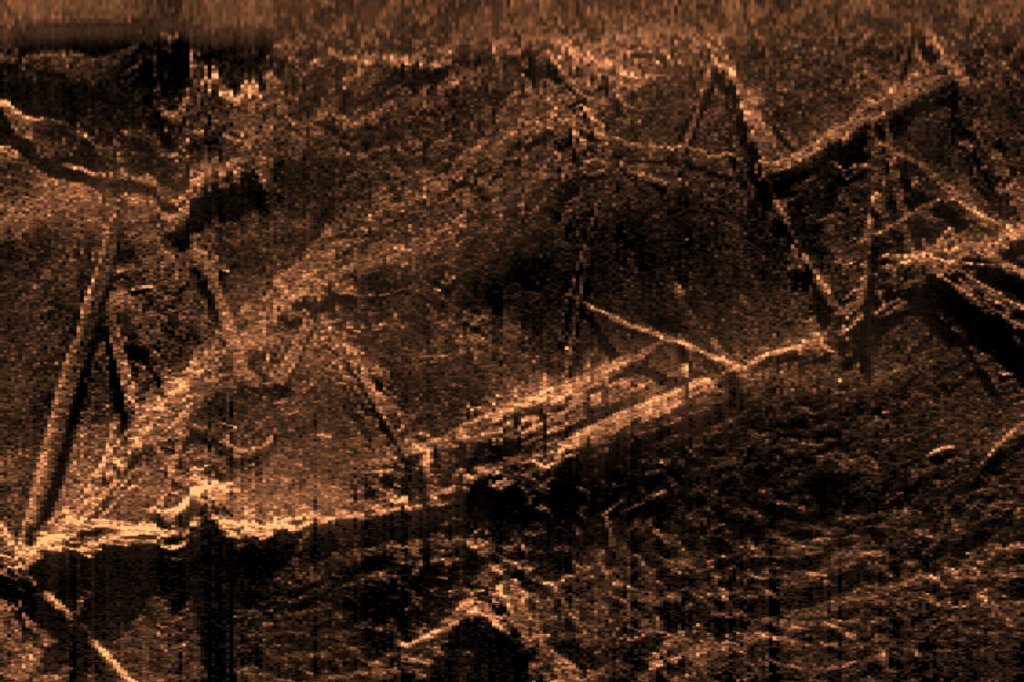
A sonar image showing the wreckage of the Clotilda, SEARCH Inc./Alabama Historical Commission, via Associated Press
2023
Africatown Heritage House Museum officially opens in Mobile, AL on July 8.
2024
Following twenty years of research on the
Guerrero, Diving With a Purpose members traveled to Liberia, to meet with descendants of the Guerrero survivors.The visit included a symposium, interviews, filming, and discussions with living descendants about building a memorial park in their honor.
2024
Mel Fisher Maritime Museum unveils a new permanent exhibit, Spirits of the Passage: The Story of the Transatlantic Slave Trade, with a focus on material objects from the Henrietta Marie.
2025
All NEH Landmarks programs, including From Clotilda to Community: The History of Mobile Alabama’s Africatown, were canceled in April.
Participants were notified that these programs will no longer be offered due to DOGE’s termination of their grant award.
 Sunken Histories